
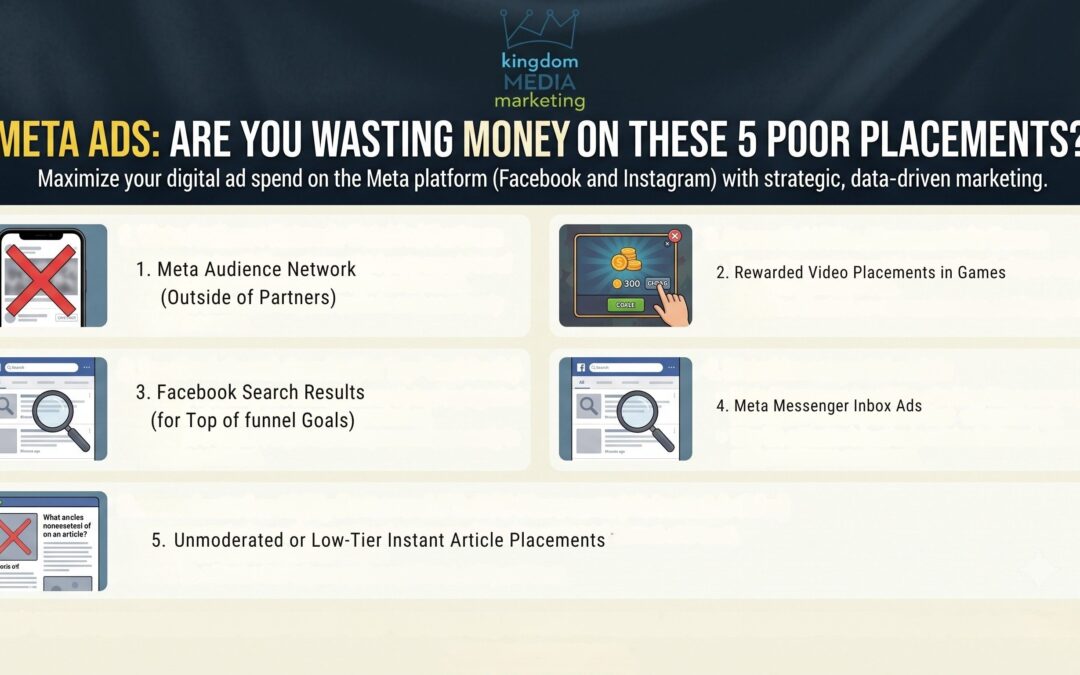
Maximize your digital ad spend on the Meta platform (Facebook and Instagram) by avoiding the hidden budget-killers that decrease ROI and frustrate users.
Why Automatic Placements Might Be Hurting Your Campaign.
Running Meta ads can be incredibly effective, but not all placements are created equal. Many advertisers leave “Automatic Placements” turned on, allowing Meta’s algorithm to push ads into corners of the internet that offer very little value.
If your primary goal is driving genuine conversions or high-quality traffic, you must be strategic about where your ads appear.
5 Meta Ad Placements to Avoid to Protect Your ROI
Here are five specific Meta ad placements you should avoid, as they often lead to wasted spend:
-
Meta Audience Network (Outside Trusted Partners)
The Audience Network extends your reach beyond Facebook and Instagram to thousands of high-quality websites and apps. However, if you don’t filter this or rely on unvetted, low-tier sources, you are playing a dangerous game.
The Issue: Untargeted traffic from obscure, low-quality, or sometimes fraudulent third-party apps can spike. Many users click on these ads entirely by accident while navigating an unrelated app.
Why it’s a Waste: This leads to inflated traffic numbers with near-zero intent and dismal conversion rates. You are essentially paying for “fat finger” clicks and low-trust engagement.
-
Rewarded Video Placements in Games
This placement involves showing your video ad to gamers in exchange for an in-game reward, such as currency, extra lives, or premium items.
The Issue: The entire engagement is transactional. The user is only watching your ad to get the reward, not because they are interested in your product or service. Most users are waiting impatiently for the “Close” or “X” button to appear.
Why it’s a Waste: While you get views (since they are required to watch to get the reward), these views rarely translate into interest or conversions. This traffic usually has no genuine intent to buy from or engage with your brand long-term.
-
Facebook Search Results (for Top-Funnel Goals)
Meta allows your ads to appear alongside relevant search results on Facebook.
The Issue: People using the search bar on Facebook are usually looking for a specific person, group, or piece of content—they are rarely in a buying mindset. Furthermore, the search bar on Facebook is often used to navigate within the platform rather than discover new products (unlike Google Search).
Why it’s a Waste: High-intent product discovery is low here. If you are aiming for broad awareness or casual browsing (top-funnel), search is particularly ineffective and can attract the wrong type of generic, low-conversion engagement.
-
Meta Messenger Inbox Ads
Messenger ads appear directly in the Inbox tab, between conversations.
The Issue: Messenger is a highly personal, conversational space. An advertisement popping up next to personal chats is inherently intrusive and disruptive. Many users actively dislike seeing corporate messaging in their private messaging flow.
Why it’s a Waste: While Messenger has some great ad formats (like Click-to-Messenger), the direct Inbox placement often feels spammy and can alienate potential customers rather than attract them. It’s often ignored or resented.
-
Unmoderated or Low-Tier Instant Article Placements
Instant Articles allow publishers to create fast, interactive articles that load instantly within Facebook.
The Issue: If your ad is placed in generic, automated, or unmoderated ‘articles’ that are low-quality or nonsensical, it creates poor brand adjacency. Your professional advertisement can appear next to controversial, irrelevant, or low-grade content, damaging your brand safety.
Why it’s a Waste: Poor adjacency damages brand safety and trust. Users will associate your business with the low-quality content they are reading, and you lose any perceived authority.
How to Take Control of Your Ad Budget and Maximize Results
Stop Wasting Money and Maximize Your ROI
Don’t let Meta automate your success into obscurity. By selectively refining your placements, you ensure every dollar of your ad budget goes toward genuine visibility and intent-driven traffic.
Take control of your digital campaign management. Stop trusting defaults, start using data, and focus your strategy on the placements that actually drive results.