
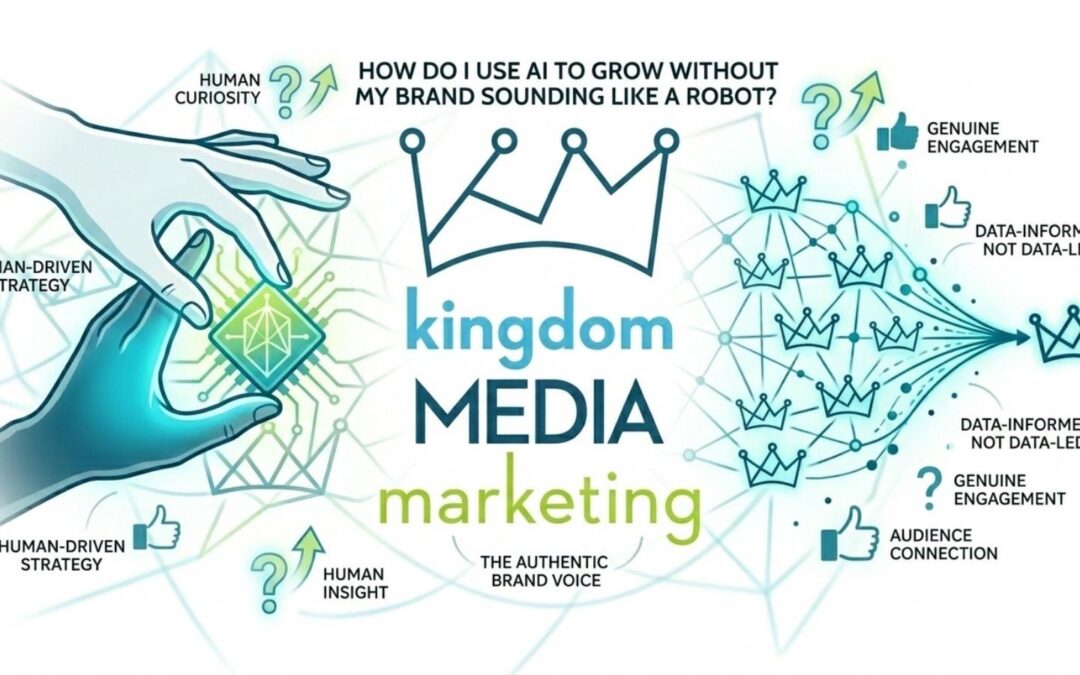
In 2026, the digital landscape is saturated. With AI tools now capable of generating endless streams of content, images, and videos at the click of a button, we’ve reached a tipping point: Content is everywhere, but connection is harder to find than ever.
The biggest challenge facing businesses today isn’t how to use AI; it’s how to use it without losing the very thing that makes people buy: trust.
Here is why a human-centered approach to AI is the only way to stand out in an automated world.
The “Uncanny Valley” of Digital Marketing
We’ve all experienced it; an ad that looks a little too perfect or a blog post that reads like a technical manual. This is the “Uncanny Valley.” When marketing is 100% machine-led, it lacks the nuance, the lived experience, and the emotional resonance that triggers a human response.
If your audience feels like they are talking to an algorithm, they will treat your brand like a commodity. If they feel like they are talking to a person, they become a community.
Efficiency is a Tool, Not a Strategy
AI is arguably the greatest efficiency tool ever created. It can analyze thousands of customer reviews or summarize complex data in seconds. But efficiency is not the same as effectiveness.
- AI handles the “What”: Data patterns, keyword research, and structural drafts.
- Humans handle the “So What?”: Why does this matter to the customer? How does it solve their specific pain point today?
True marketing success in 2026 comes from using AI to handle the heavy lifting so that your team has the mental bandwidth to focus on empathy and creativity.
Three Pillars of Human-First AI
1. Data-Informed, Not Data-Driven
Let data suggest the direction, but let human intuition make the final call. If the data says “post more cat memes” but your brand is a high-end law firm, a human knows when to ignore the algorithm to protect the brand’s integrity.
2. The “Vibe Check”
Every piece of automated content must pass through a human filter. Does it sound like your brand? Does it address current events with sensitivity? AI doesn’t have a “moral compass” or a sense of timing—only you do.
3. Radical Transparency
In an era of deepfakes and bot-driven comments, honesty is a competitive advantage. Being transparent about your process and showing the real people behind the brand builds a level of loyalty that an AI prompt simply cannot replicate.
The Bottom Line
AI is here to stay, and it is a vital part of a modern marketing toolkit. But it is a co-pilot, not the captain. The brands that will thrive over the next decade are those that use technology to become more human, not less.
By focusing on storytelling, authentic engagement, and strategic oversight, you can harness the speed of AI while maintaining the soul of your business.